Next Basic Qualification Radio Course
2027 Online Course (Winter Session)
Feb. 6 to Mar. 6, 2027
About the Radio Course
The RARC Basic Qualification course is structured around a curriculum based on the 100 topics from Innovation, Science and Economic Development Canada (ISED) exam for the Amateur Radio Operator Certificate.
Classes will be on Saturday mornings from 9 am to 12 noon, starting on February 6th, for four cnsecutive Saturday mornings, with an in-person exam on March 6th, 2027. There will be an additional, optional extra-curricular session on Mar. 13th with presentaions on various Amateur radio topics such as choosing and purchasing your first radio.
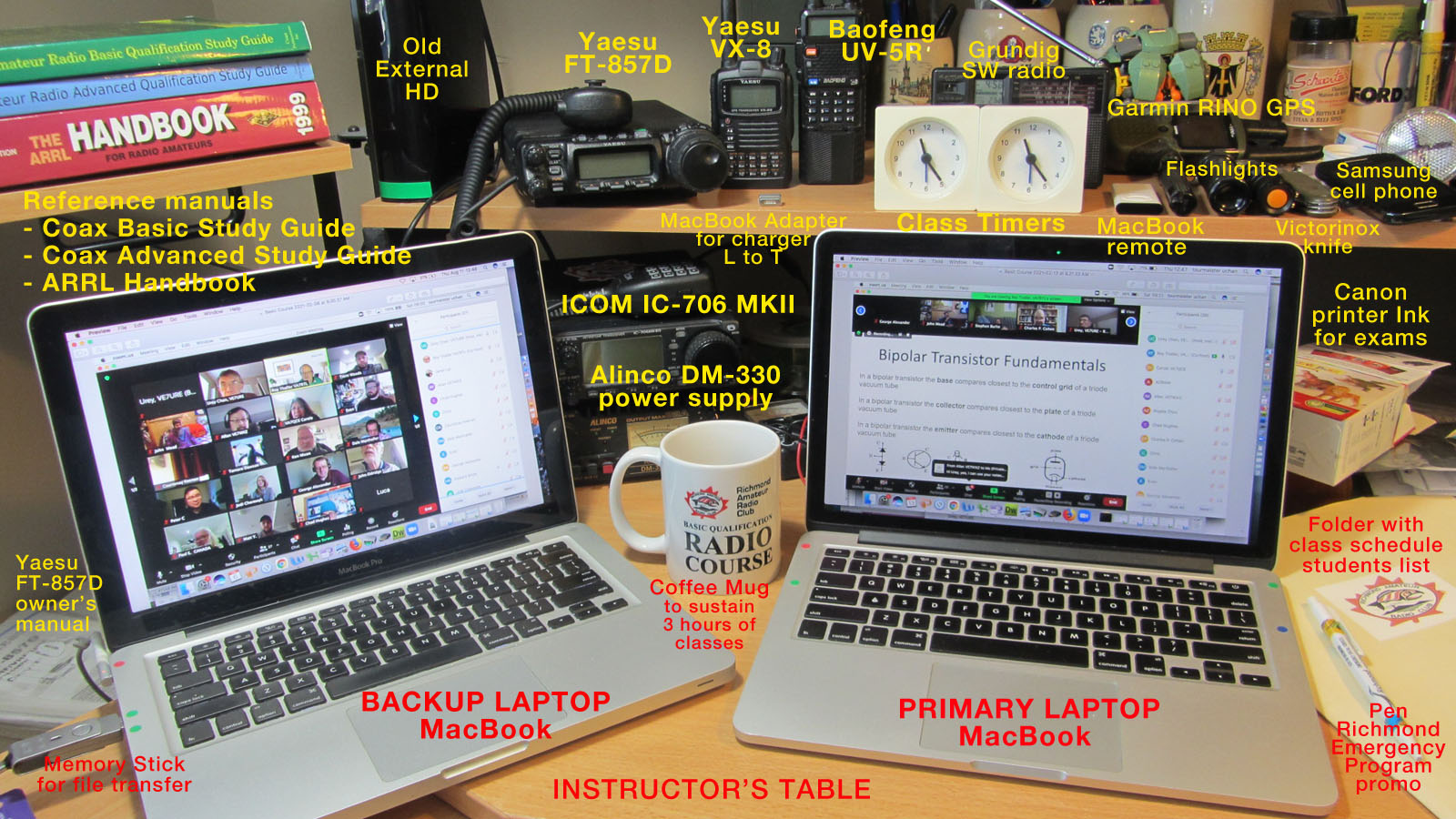
Syllabus for the online version of this course includes audio-visual content with class presentations supplemented with reference handouts to help students obtain a better understanding of the Amateur radio topics and basic radio operations.
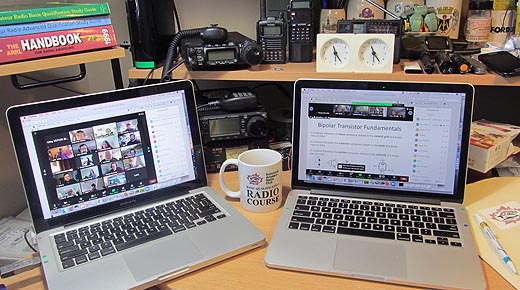
The classroom is an Internet-based, online environment using mainstream virtual conferencing tools (i.e. Zoom). Class size will still be limited to retain the quality of productive discussions and knowledge exchange.
The exam will be conducted in-person in an open food court area at a local mall in the Richmond area. Such a public area has proven to be a practical decision as the venue is quiet during that part of the morning and there is ample free parking as well as convenient access from Canada Line transit stations. One-to-one online examinations are available but that option will be used only if written exams are not possible. The Richmond location for the written exam will be confirmed when we are closer to the exam date.
Registration fee for the course includes a course companion text, reference handouts, instructor presentations, Government of Canada (ISED) Basic Qualification exam, and online registration of call sign upon passing exam. Successful students will each receive a one-year trial membership with RARC.
Payment of registration fee can be made electronically by either PayPal or Interac e-Transfer. Payment information is on the right-hand column of this page.

Richmond Malls are ideal venues for writing exams as each student occupies his/her own table, there is good lighting and miniminal distractions at 9:00 am, one hour before the stores open. (Photo taken during Nov. 2023 exam)
Course Instructors
Classes are conducted by a faculty of instructors who are RARC members that are knowledgable and passionate about their respective Amateur radio subjects of interest. Some instructors are long-time radio operators and also hold Advanced and Morse Code qualifications. Classes usually have more than one instructor as well as other club members present to assist with the presentations and help answer questions from students. The exam will be conducted by RARC members who are Government of Canada ISED accredited (volunteer) examiners.
Why do you need a Basic qualification?
A Basic qualification certificate is required by ISED to legally transmit on allocated Amateur radio frequencies and is usually the first step into the Amateur radio hobby. Morse Code is a separate qualification and is no longer a requirement for a Basic qualification certificate. The Advanced(and Morse Code) qualification can be obtained for additional operating privileges after the Basic qualification.
Since many emergency communication services involve Amateur radio, volunteers (in Canada) will require a Basic qualification in order to operate on Amateur frequencies during emergency exercises and activation. As radio transmissions using HF bands are becoming more significant in emergency commmunications, it is recommended that Amateur radio operators possess at least Basic with Honours qualification (80%+ exam score) before volunteering with an Amateur radio emergency communications organization.
Why take the online course with RARC?
Our Basic Qualification online courses, offered twice a year, have attracted students from as far north as Yellowknife and as far east as Kingston. But our course content delivery is based on local and regional Amateur radio interests and activities to provide a greater learning experience. Many RARC members are also active with other radio clubs with the strong interactivity between local clubs, so students receive an overview of the local Amateur radio community in the course. |